About Anayah
Getting to a doctor and getting an answer are not the same thing.
A note from the founder
I started Anayah after my own diagnosis with PMOS. Unexplained weight gain, acne, hair thinning, and eventually a name for it.
Getting the diagnosis turned out to be only half of it. PMOS is managed through lifestyle rather than medication, there is no cure, and it carries real risks later on. Nobody handed me a map for any of that.
Anayah is what I wish I'd had. Somewhere to understand what's happening, ask better questions, and not feel like you're working it out alone.
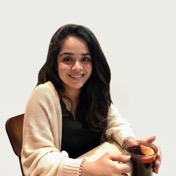
Nyssa Desai, building Anayah
FAQs
Is this an app?
No, it's just a website. Nothing to download. Open it in your phone's browser and it works.
Is it free?
The guides and the appointment prep questions are free, and they'll stay that way.
Do I have to sign up for anything?
No. Nothing here asks you to make an account. The appointment prep questions don't need an email and don't save anything. The waitlist is there if you'd like to know when we launch, and that's the only place we ask you for anything.
What happens to my data?
The appointment prep questions don't store anything. There's nothing to fill in, nothing is saved, and nothing is sent anywhere. If you join the waitlist we keep your email, and that's all.
Is this medical advice?
No, and it isn't trying to be. Anayah doesn't interpret your symptoms or your results, and it won't suggest a test or a treatment. What it can do is help you ask better questions of a doctor who can.
Where do these numbers come from?
Every number here comes from a study, and we link to it so you can read it yourself. Some research is stronger than other research, so we say when a figure is shakier than it looks, or when the studies disagree with each other. If we get something wrong, we fix it.
Why is it built for Indian women specifically?
Because the numbers are genuinely different here, and that changes what your result means. Obesity is measured from a BMI of 25 in India rather than 30, because metabolic risk arrives at a lower weight. Applied to the same 3,877 apparently healthy Indian women, the WHO threshold puts 8% in the obese range and the Indian one puts around 40%. The same woman is cleared by one standard and flagged by the other, on the same measurements.
Why do you call it PMOS?
PCOS was renamed Polyendocrine Metabolic Ovarian Syndrome, or PMOS, in 2026, after a global consensus process published in The Lancet. It's the same condition. Both names will be in use for a while, so we say PMOS with PCOS alongside it. We've written about what changed and why.
Want to know when it's ready?
Tell us where you are and we'll come back to you before we build it.
Sources2 studies
- 1. World Economic Forum and McKinsey Health Institute, 2024. An insight report modelling the women's health gap to 2040, built on the IHME Global Burden of Disease 2019 data. The nine years is its own average for time spent in poor health, and the 25% is its comparison with men. Its estimates assume that where gender-based efficacy was never measured, the gap matches the cases where it was.
- 2. Kaur I, Suri V, Rana SV, Singh A, 2021, PLOS ONE. A mixed-method study of the treatment pathways women with the condition actually travel, in north India. The paper reports that 9.1% got information about their condition from a doctor; 90.9% is that figure stated the other way round.